

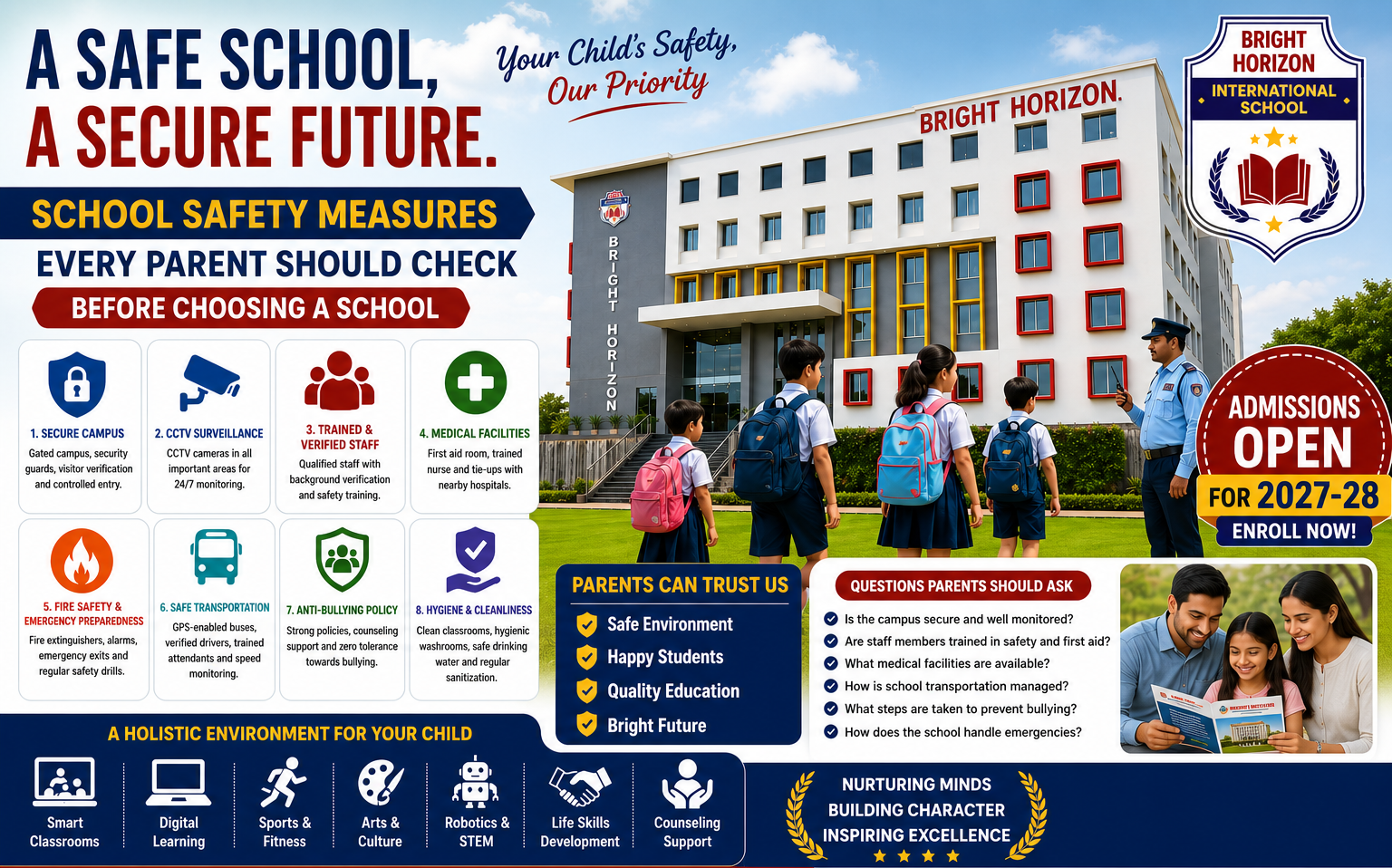
School Safety Measures Every Parent Should Check Before Choosing a School
Choosing the right school is one of the most important decisions parents make for their child’s future. While academic excellence, experienced teachers, and modern facilities are essential, student safety should always be a top priority. A safe school environment allows children to learn confidently, participate in activities, and grow emotionally without fear.
Today’s parents expect schools to provide not only quality education but also strong safety standards that protect students every day. From secure campuses and trained staff to health facilities and emergency preparedness, every aspect of school safety matters.
In this blog, we’ll discuss the essential school safety measures every parent should check before enrolling their child.
Why School Safety Is Important
A safe school environment supports both academic success and emotional well-being. When students feel secure, they are more likely to focus on learning, participate in classroom activities, and develop confidence.
Benefits of a Safe School Environment
- Better academic performance
- Improved emotional well-being
- Increased student confidence
- Positive learning atmosphere
- Reduced stress and anxiety
- Strong parent trust
1. Secure School Campus
The first thing parents should check is whether the school has a secure campus with controlled entry and exit points.
Important safety features include:
- Gated campus
- Security guards
- Visitor verification system
- Student ID cards
- Restricted unauthorized access
These measures help ensure that only authorized individuals enter the school premises.
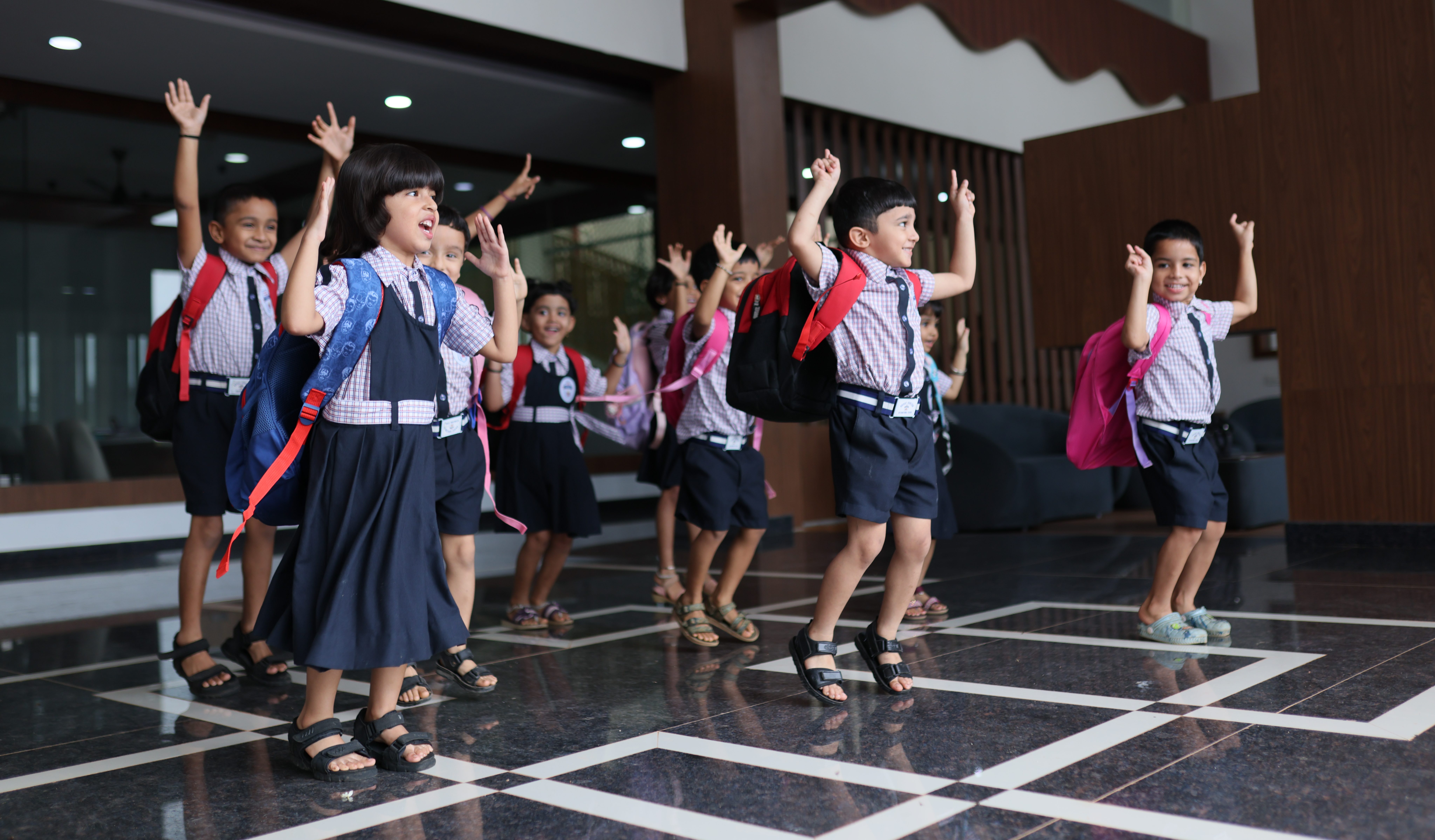
2. CCTV Surveillance
Modern schools use CCTV cameras to monitor classrooms, corridors, playgrounds, entrances, and common areas.
Benefits include:
- Improved campus security
- Better incident monitoring
- Enhanced student protection
- Faster response to emergencies
Parents should ask whether the CCTV system is regularly monitored.
3. Qualified and Trained Staff
A good school ensures that teachers, administrators, transport staff, and support personnel are trained in student safety and emergency procedures.
Staff training should include:
- Child protection policies
- Emergency evacuation
- First aid
- Fire safety
- Student supervision
Well-trained staff can respond quickly during emergencies.
4. Medical Facilities and First Aid
Schools should have basic medical facilities to provide immediate care when students feel unwell or sustain minor injuries.
Parents should check for:
- First aid room
- Qualified nurse or medical staff
- Emergency medical support
- Nearby hospital tie-ups
- Student health records
Quick medical attention helps keep students safe and reassures parents.
5. Fire Safety and Emergency Preparedness
Schools must be prepared for unexpected situations.
Look for:
- Fire extinguishers
- Smoke detectors
- Emergency exits
- Fire drills
- Evacuation plans
Regular safety drills help students and staff respond calmly during emergencies.
6. Safe School Transportation
If your child uses school transportation, safety should extend beyond the campus.
A reliable school transport system includes:
- GPS-enabled buses
- Verified drivers
- Trained attendants
- Speed monitoring
- Regular vehicle maintenance
- Parent tracking systems
Safe transportation gives parents greater peace of mind.
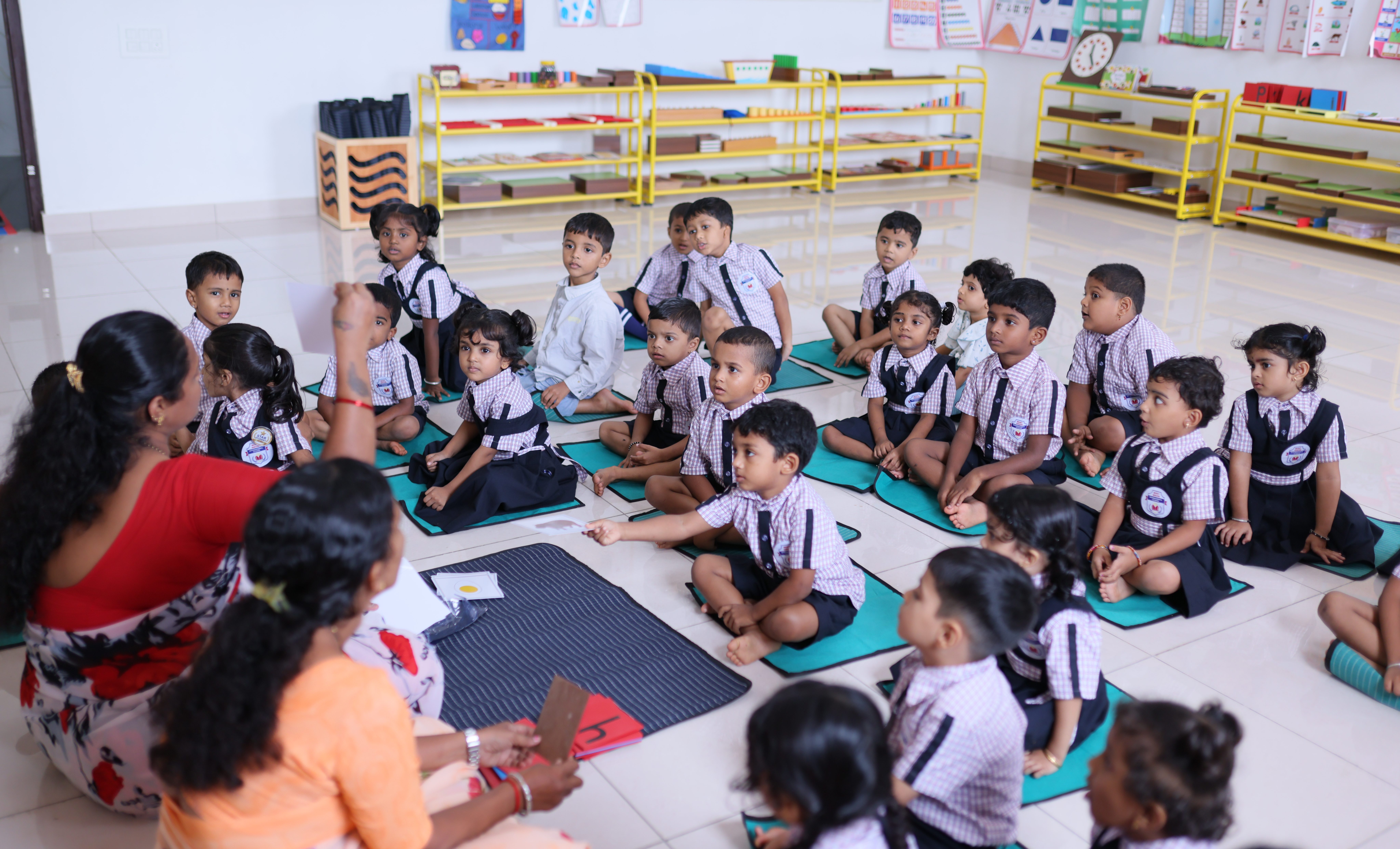
7. Clean and Hygienic Campus
A clean school environment reduces the spread of illness and promotes student well-being.
Parents should observe:
- Clean classrooms
- Sanitized washrooms
- Safe drinking water
- Hygienic dining areas
- Proper waste management
Healthy surroundings support better learning.
8. Anti-Bullying Policies
Every child deserves to learn in a respectful and supportive environment.
A good school should have:
- Clear anti-bullying policies
- Student counseling
- Teacher supervision
- Anonymous reporting systems
- Positive discipline practices
Schools that actively prevent bullying help students feel safe and respected.
9. Digital Safety and Cyber Awareness
As technology becomes an essential part of education, schools should also teach students how to stay safe online.
Digital safety includes:
- Responsible internet use
- Cyberbullying awareness
- Online privacy education
- Secure digital learning platforms
- Internet safety workshops
Teaching digital responsibility prepares students for the modern world.
10. Strong Parent-School Communication
Effective communication helps parents stay informed about their child’s safety and progress.
Good schools provide:
- Parent-teacher meetings
- School mobile apps
- SMS or email alerts
- Emergency notifications
- Regular progress updates
Open communication builds trust between parents and the school.
Questions Parents Should Ask Before Admission
Before enrolling your child, ask the school:
- Is the campus secure?
- Are CCTV cameras installed?
- How are visitors monitored?
- What medical facilities are available?
- How often are fire drills conducted?
- Is school transportation safe?
- What is the school’s anti-bullying policy?
- How are parents informed during emergencies?
These questions can help parents make a confident and informed decision.
How Schools Create a Safe Learning Environment
Leading schools focus on safety by:
- Maintaining secure infrastructure
- Conducting regular safety audits
- Training teachers and staff
- Promoting student well-being
- Providing counseling services
- Encouraging respectful behavior
- Following health and safety standards
A safe environment allows students to learn, grow, and achieve their full potential.
School safety is just as important as academic excellence. A secure campus, trained staff, medical facilities, safe transportation, anti-bullying policies, and effective parent communication all contribute to a positive learning experience.
Parents should carefully evaluate a school’s safety measures before making an admission decision. A school that prioritizes student safety creates an environment where children feel protected, confident, and ready to succeed academically and personally.


Leave a Reply