

Residential School vs Day School: Which Is the Better Choice for Your Child?
Choosing the right school is one of the most important decisions every parent makes. While academic excellence is a priority, the learning environment also plays a significant role in shaping a child’s personality, confidence, and future success.
One of the most common questions parents face is whether to choose a residential (boarding) school or a day school. Both offer quality education, experienced teachers, and opportunities for overall development. However, they provide very different experiences when it comes to daily life, independence, family involvement, and personal growth.
This guide will help you understand the key differences and determine which option best suits your child’s needs.
Understanding Residential Schools
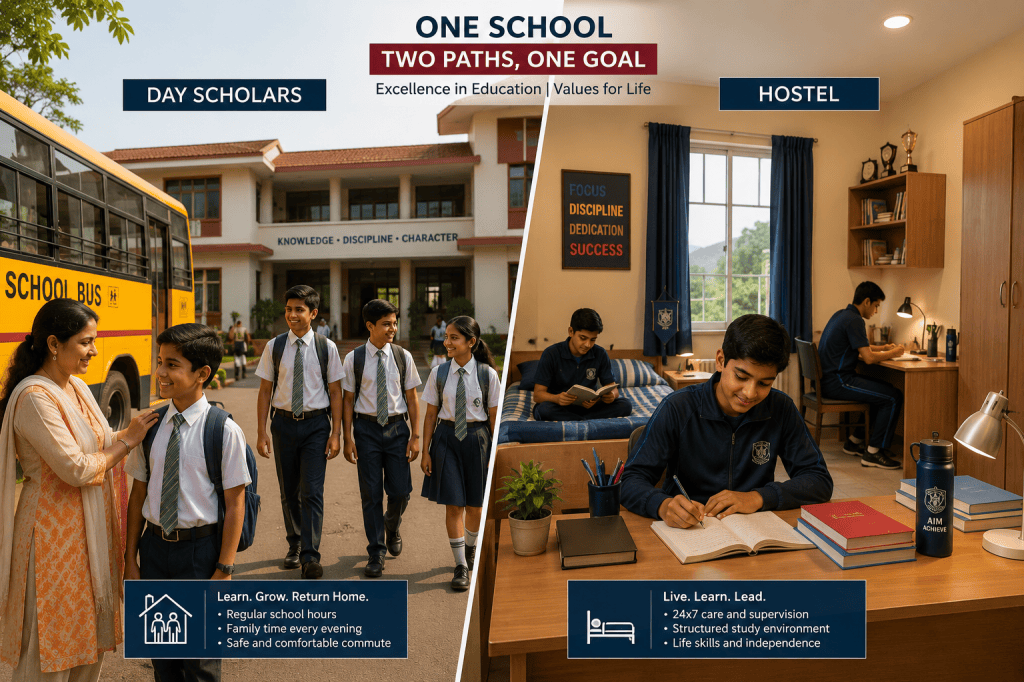
A residential school, also known as a boarding school, provides students with a complete campus experience where they live, study, participate in extracurricular activities, and interact with peers throughout the day. Everything from academics to sports, meals, and supervised study hours takes place within the campus.
This structured environment encourages students to become responsible, disciplined, and independent while receiving continuous guidance from experienced teachers and hostel mentors.
Understanding Day Schools
A day school allows students to attend classes during the day and return home in the evening. Children benefit from quality education while continuing to enjoy the comfort, emotional support, and guidance of their families.
Day schools provide an excellent balance between academic learning and family life, making them a preferred choice for many parents.
Residential School vs Day School: A Detailed Comparison
1. Daily Routine and Time Management
Residential School
Residential schools follow a carefully planned daily schedule that includes morning exercise, classroom learning, supervised study sessions, sports, extracurricular activities, meals, and rest. Every hour is organized to maximize productivity and personal development.
Since students stay on campus, they save valuable commuting time and can devote more hours to academics, hobbies, and skill-building activities.
Day School
Day school students attend classes during school hours and return home afterward. Their evenings are flexible, allowing time for family interaction, tuition classes, hobbies, or relaxation.
Students enjoy greater freedom in managing their schedules, although maintaining discipline often depends on parental guidance.
2. Independence and Personal Growth
Residential School
Boarding schools help students develop independence from an early age. Living away from home teaches valuable life skills such as:
- Time management
- Personal responsibility
- Self-discipline
- Decision-making
- Problem-solving
- Adaptability
Students also learn to manage their belongings, organize their studies, and handle everyday responsibilities confidently.
Day School
Day school students receive continuous emotional and practical support from their families. Parents remain actively involved in homework, daily routines, and personal development.
This environment provides comfort and stability while allowing children to mature gradually.
3. Academic Environment
Residential School
Because students live on campus, they have easier access to teachers, supervised study sessions, libraries, laboratories, and learning resources. Many residential schools also provide specialized coaching for competitive exams such as IIT-JEE, NEET, Olympiads, and foundation programs.
The structured learning environment helps students stay focused and maintain consistent academic performance.
Day School
Day schools also deliver excellent academics with experienced faculty and modern classrooms. Students have the flexibility to attend private coaching, music classes, sports academies, or other enrichment programs after school hours.
4. Social Life and Friendships
Residential School
Students spend nearly every hour together—studying, eating, playing sports, and living in hostels. This creates lifelong friendships, strong teamwork skills, and exposure to students from different cultures and backgrounds.
Living together teaches cooperation, empathy, leadership, and respect for diversity.
Day School
Students build friendships during school hours while maintaining strong relationships within their neighborhoods and extended families. Their social life extends beyond school through community events, sports clubs, and family gatherings.
5. Family Involvement
Residential School
Parents stay connected through scheduled visits, regular communication, progress reports, and parent meetings. While children become more independent, schools ensure families remain informed about their academic and personal growth.
Day School
Parents participate in their child’s daily routine, helping with studies, attending school events, and providing continuous emotional support. This close involvement strengthens family bonds throughout the child’s school years.
6. Sports and Extracurricular Activities
Residential School
Students enjoy extended access to sports facilities, performing arts, clubs, leadership programs, and skill-development activities. Since they live on campus, they can dedicate more time to training and competitions without travel constraints.
Day School
Students participate in school activities during regular hours and often pursue additional coaching or hobbies outside school based on their interests and schedules.
7. Cost Considerations
Residential schools generally have higher fees because they include:
- Hostel accommodation
- Nutritious meals
- Laundry services
- Medical care
- Campus security
- Residential supervision
- Academic support
Day schools are usually more affordable since families manage accommodation and daily living expenses independently.
Residential School vs Day School: Quick Comparison
| Feature | Residential School | Day School |
|---|---|---|
| Living Style | Campus-based, 24/7 learning environment | Home-based with daily commute |
| Independence | High | Moderate |
| Family Interaction | Scheduled visits and communication | Daily interaction |
| Academic Support | Continuous supervision | School hours with home support |
| Sports & Activities | Extended campus access | Limited to school timings |
| Social Development | Strong residential community | School and neighborhood friendships |
| Cost | Higher | More affordable |
Which School Is the Right Choice?
Choose a Residential School If:
- Your child is ready to become more independent.
- You want a disciplined and structured learning environment.
- The school offers exceptional facilities for sports, academics, or competitive exam preparation.
- Parents have demanding work schedules and prefer a well-supervised campus.
- You want your child to develop leadership, confidence, and life skills.
Choose a Day School If:
- Family bonding is your highest priority.
- Your child feels more comfortable living at home.
- Parents prefer to monitor daily academic progress.
- Good schools are available within commuting distance.
- Your child enjoys participating in local community activities and family traditions.
There is no universal answer to the question of whether a residential school or a day school is better. Every child is unique, and the ideal choice depends on their personality, learning style, emotional maturity, and family circumstances.
A residential school provides an immersive environment that nurtures independence, discipline, leadership, and holistic development. A day school offers the warmth of family support, flexibility, and a balanced home-school life.
Before making your decision, visit the school campus, meet the teachers, understand the facilities, and most importantly, consider your child’s aspirations and comfort level. The right environment will not only help them excel academically but also prepare them to become confident, responsible, and successful individuals.


Leave a Reply