

By the Education Karnataka Editorial Team · Last updated: November 2026
Quick answer: Day schools keep children at home with daily family involvement, usually at a lower cost. Boarding schools offer structured routines, supervised study, independence and access to schools beyond your town, at a higher cost and with less daily family time. The better choice depends on your child’s needs, your family situation and the quality of schools available near you.
Key takeaways
- Neither option is better for every child. The best fit depends on the child and the specific school.
- Boarding schools are strongest at routine, supervised study and independence.
- Day schools are strongest at daily family connection and lower cost.
- Compare the total annual cost, including transport and tuition classes, not just the school fee.
Side-by-side comparison
| Factor | Day school | Boarding school |
| Family time | Daily | Weekends, visiting days and holidays |
| Daily routine | Set by the family | Structured by the school |
| Evening study | Depends on the home environment | Usually supervised |
| Travel time | Daily commute (can be long in cities) | None during term |
| Independence | Builds gradually | Builds faster |
| Access to schools | Limited to your area | Schools across the state |
| Cost | Usually lower | Usually higher (includes hostel and food) |
| Parental involvement | Daily | Scheduled |
| Co-curricular time | Limited by commute and tuition | Often more time in the timetable |
Advantages of boarding school
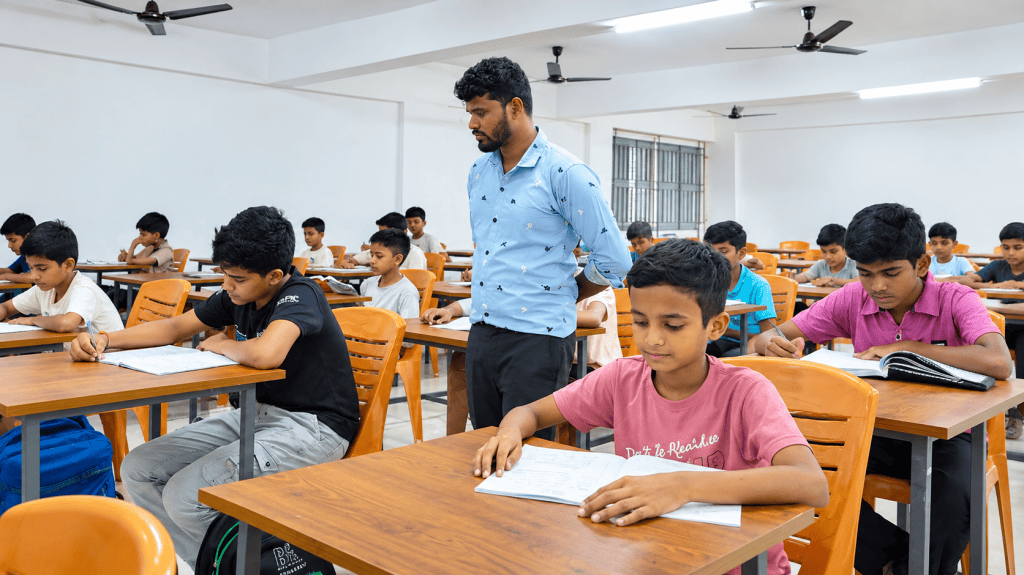
- Structured days with fixed times for study, sports and rest
- Supervised evening study, which helps children who struggle to study at home
- Independence and life skills, such as managing time, belongings and relationships
- No daily commute, which matters in cities with long travel times
- Access to schools beyond your town, which is especially useful for families in areas with limited options
- Fewer screen distractions, since most boarding schools limit device use
Challenges of boarding school
- Homesickness, especially in the first term
- Less daily involvement for parents
- Higher total cost
- Quality varies widely, so careful checking is essential
- Not every child thrives in a group-living environment
Advantages of day school
- Daily family connection and parental guidance
- Lower cost in most cases
- Familiar surroundings and existing friendships
- Easier to monitor health, studies and emotional wellbeing
Challenges of day school
- Long commutes in some areas reduce time for study and play
- Evening study depends on the home, including parents’ schedules, distractions and screens
- Separate tuition classes can add to cost and time
- Fewer good school options in some towns and rural areas
Which option suits which family?
| Situation | Often a good fit |
| Both parents work long hours or travel often | Boarding school |
| Few good schools near home | Boarding school |
| Child needs structured study and fewer distractions | Boarding school |
| Child is very young or emotionally needs daily parental contact | Day school |
| Family prefers close daily involvement | Day school |
| Good-quality day school within short travel distance | Day school |
Is there a middle path?
Yes. Some schools offer day-boarding (the child stays until evening study and goes home at night) or weekly boarding (home every weekend). See our guide on the difference between fully residential, weekly boarding and day-boarding.
Frequently asked questions
Is boarding school better than day school for academics? Not automatically. Supervised study helps many children, but teaching quality matters most. Compare specific schools, not formats.
Do boarding school children lose touch with family? Not if contact is regular. Calls, visiting days and holidays keep families close. Many parents find their time together becomes more focused.
Is boarding school only for rich families? No. Costs range widely, from government residential schools with low or no fees to premium international schools.
Can a child move from day school to boarding school mid-year? Some schools allow it, depending on seats and board rules, but starting at the beginning of the year is usually easier.
How do I decide between the two? List your child’s needs and your family’s situation, visit both types of schools, and involve your child in the final decision.
Need help shortlisting schools? Browse our directory of boarding schools in Karnataka and residential PU colleges in Karnataka, or message us on WhatsApp for guidance.
About Education Karnataka: a directory of residential schools and PU colleges across Karnataka, helping parents compare their options.


Leave a Reply