

How Project-Based Learning Improves Student Success
Education is evolving rapidly, and today’s students need more than textbook knowledge to thrive in the future. They need creativity, critical thinking, problem-solving abilities, communication skills, teamwork, and practical experience.
One of the most effective approaches for developing these essential skills is Project-Based Learning (PBL).
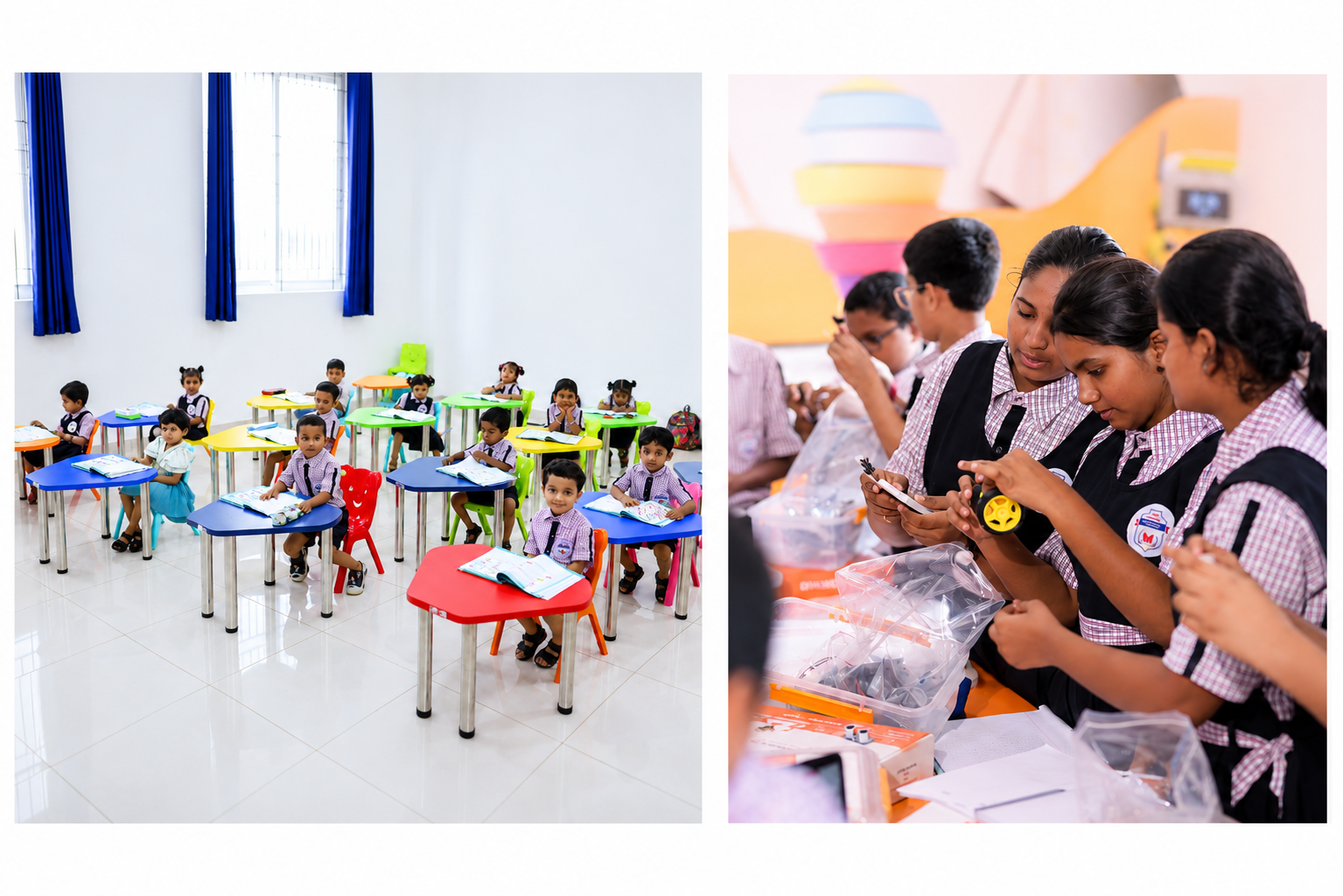
At Bright Horizon International School, under the leadership of Chairman Dr. Sharath Gore, Project-Based Learning plays an important role in creating confident, curious, creative, and capable learners who are prepared to face real-world challenges.
What is Project-Based Learning?
Project-Based Learning (PBL) is a student-centered teaching approach where students learn by actively exploring real-life problems and completing meaningful projects.
Instead of simply memorizing facts, students investigate, research, collaborate, experiment, and present practical solutions. This hands-on approach encourages students to apply classroom knowledge to everyday situations, making education more engaging, meaningful, and effective.
Benefits of Project-Based Learning
1. Improves Critical Thinking Skills
Project-Based Learning encourages students to analyze problems, evaluate different possibilities, and make informed decisions. These experiences strengthen logical thinking and help students prepare for complex challenges in higher education and future careers.
2. Enhances Problem-Solving Ability
Every project involves planning, research, experimentation, and overcoming challenges. Students learn to approach problems independently, explore possible solutions, and learn from their experiences.
3. Makes Learning More Engaging
Project-Based Learning transforms the classroom into an interactive learning environment. Students actively participate in activities instead of simply listening to lectures, making lessons more enjoyable and memorable.
4. Develops Teamwork and Collaboration
Many projects involve group activities. Students learn how to communicate with their classmates, share responsibilities, cooperate with others, and work toward a common goal. These skills help develop leadership and interpersonal abilities.
5. Boosts Creativity and Innovation
PBL gives students opportunities to think differently, develop original ideas, and create innovative solutions. It encourages curiosity and allows students to explore their interests through practical activities.
6. Builds Communication Skills
Project presentations help students develop public speaking, writing, listening, and presentation skills. Students learn how to express their ideas clearly and confidently—abilities that are valuable in both academic and professional life.
7. Encourages Independent Learning
Students learn how to find information, conduct research, manage time, organize tasks, and take responsibility for completing their projects. These habits encourage independence and lifelong learning.
8. Connects Classroom Learning with Real Life
Project-Based Learning helps students understand how subjects such as Science, Mathematics, English, Social Studies, and Technology connect with real-world situations.
When students understand the practical application of what they learn, education becomes more meaningful.
How Project-Based Learning Supports Academic Success
Project-Based Learning can help students develop a deeper understanding of concepts by allowing them to apply knowledge in practical situations.
Through project-based activities, students can:
- Understand concepts more deeply
- Retain learning through practical experiences
- Participate actively in classroom activities
- Develop confidence in learning
- Strengthen research and analytical skills
- Apply knowledge to real-world situations
- Improve collaboration and communication
Instead of learning only to prepare for examinations, students develop the ability to understand, apply, analyze, and create.
Examples of Project-Based Learning Activities
Students can participate in a wide range of meaningful projects, including:
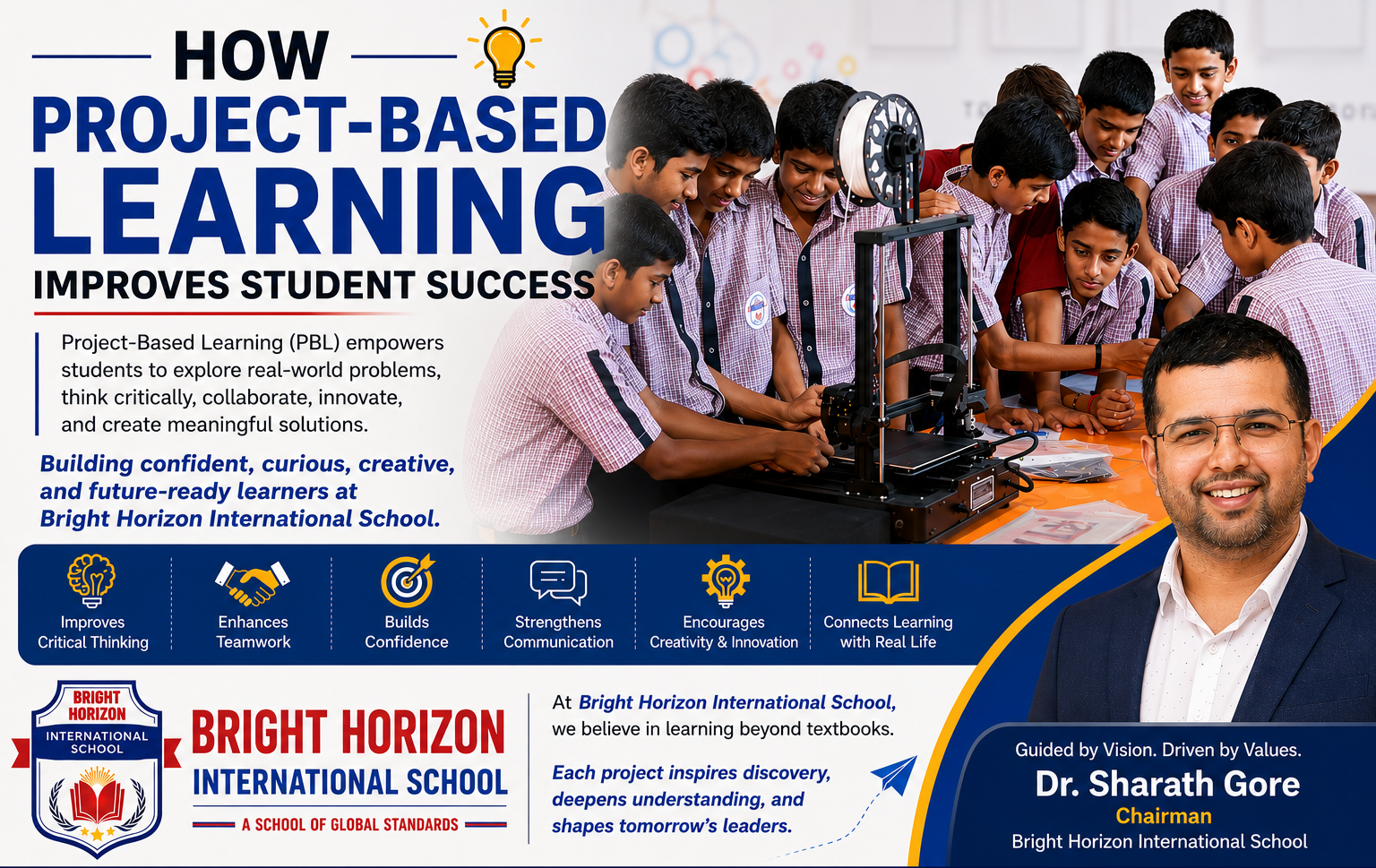
- Science model exhibitions
- Robotics and coding challenges
- Environmental awareness campaigns
- Business and entrepreneurship projects
- Community service initiatives
- STEM innovation projects
- Art and design exhibitions
- Cultural research presentations
- Technology-based learning projects
- Problem-solving and innovation activities
Such experiences encourage students to learn beyond textbooks while developing creativity, teamwork, and practical skills.
Why Parents Prefer Schools That Embrace Project-Based Learning
Today, parents increasingly look for schools that provide a balanced education that goes beyond examination preparation.
Project-Based Learning helps students develop important qualities such as:
- Independent learning
- Confident communication
- Creative thinking
- Effective problem-solving
- Leadership
- Teamwork
- Responsibility
- Adaptability
These skills can support students throughout their academic journey and help them prepare for a changing world.
Project-Based Learning at Bright Horizon International School
At Bright Horizon International School, Chairman Dr. Sharath Gore believes in creating learning opportunities that encourage students to explore, experiment, question, and innovate.
The school focuses on creating an environment where academic learning is supported by practical experiences and skill development.
Key areas include:
- Activity-based learning
- Smart classroom learning
- STEM education
- Robotics and coding
- Collaborative classroom projects
- Leadership development
- Creative thinking
- Communication skills
- Practical learning experiences
- Holistic student development
Through these initiatives, students are encouraged to discover their strengths, develop confidence, and become active participants in their own learning journey.
Preparing Students for a Future-Ready World
The world students will enter after school is constantly changing. Future careers will require more than academic knowledge. Students will need to communicate effectively, work with others, think creatively, solve unfamiliar problems, and adapt to new technologies.
Project-Based Learning provides opportunities to develop these abilities from an early stage.
By engaging students in meaningful projects, schools can help them become thinkers, creators, innovators, collaborators, and responsible leaders.
summary
Project-Based Learning is transforming the way students learn by making education interactive, practical, meaningful, and future-ready.
At Bright Horizon International School, under the leadership of Chairman Dr. Sharath Gore, the focus on innovative and activity-based learning helps students connect classroom concepts with real-world experiences.
By choosing an education that combines academic learning with practical projects, collaboration, creativity, and innovation, parents can give their children opportunities to develop the knowledge, skills, and confidence needed for lifelong success.
Bright Horizon International School is committed to nurturing young minds today and preparing them to become confident, innovative, and responsible citizens of tomorrow.


Leave a Reply