
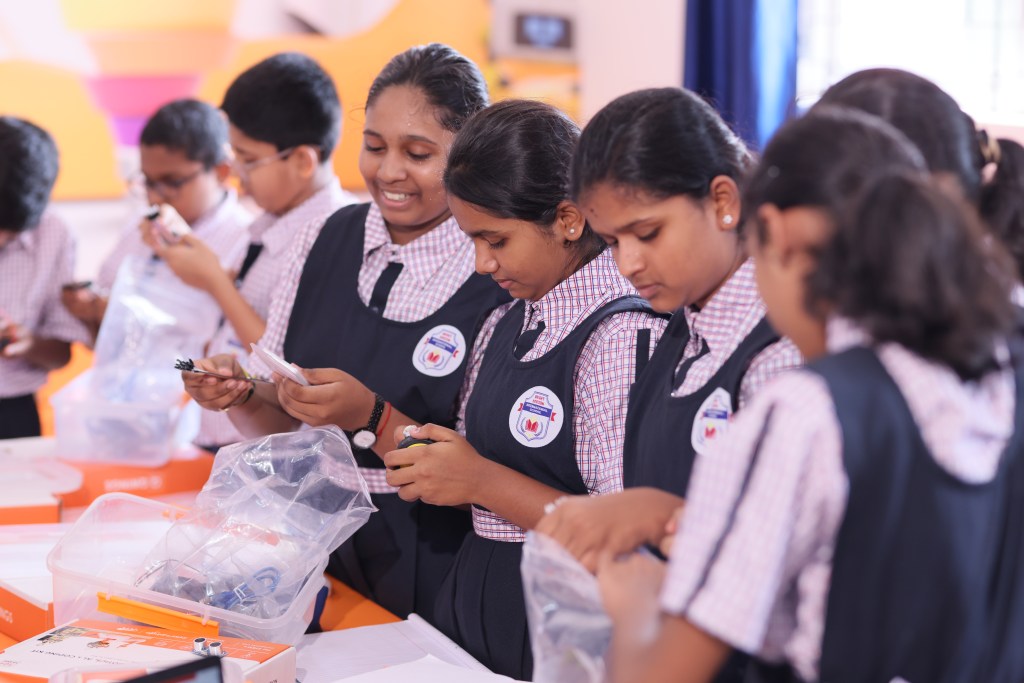
Future Skills Every Student Should Learn to Succeed in Tomorrow’s World
The world is changing faster than ever. Technology, Artificial Intelligence, automation, and globalization are transforming how we live, learn, and work. For today’s students, academic knowledge alone is not enough. They also need future-ready skills that help them adapt to change, solve problems, communicate effectively, and explore new opportunities.
Schools have an important role in preparing students not only for examinations but also for higher education, careers, and life. Developing these skills from an early age can help students become confident, creative, responsible, and adaptable individuals.
Why Are Future Skills Important for Students?
The careers of tomorrow may require skills that are different from those needed today. Students who learn to adapt, think creatively, use technology responsibly, and continue learning can be better prepared for future challenges.
Future-ready education helps students:
- Adapt to changing technology
- Solve real-world problems
- Think independently
- Communicate confidently
- Work effectively with others
- Develop leadership qualities
- Become lifelong learners
1. Critical Thinking and Problem-Solving
Critical thinking helps students understand information, consider different perspectives, and make thoughtful decisions. Instead of simply memorizing facts, students can learn to understand concepts and apply their knowledge to practical situations.
Benefits include:
- Better decision-making
- Stronger analytical skills
- Improved learning
- Greater innovation
- Effective problem-solving
Projects, experiments, puzzles, and discussions can encourage students to think beyond standard answers.
2. Communication Skills
Communication is an essential skill for education and future careers. Students should learn to express their ideas clearly through speaking, writing, presentations, and active listening.
Strong communication can help students build confidence, improve teamwork, develop leadership abilities, and express ideas clearly.
3. Digital Literacy
Technology is now part of almost every profession. Students need to understand how to use digital tools effectively and responsibly.
Digital literacy includes:
- Basic computer skills
- Online research
- Internet safety
- Responsible use of social media
- Digital collaboration
- Educational technology
4. Artificial Intelligence Awareness
Artificial Intelligence is becoming increasingly important across different industries. Introducing students to basic AI concepts can help them understand emerging technologies and their responsible use.
AI awareness can encourage students to explore technology, develop curiosity, think creatively, and discover future learning opportunities.
5. Creativity and Innovation
Creativity encourages students to look at challenges from different perspectives and develop new ideas.
Schools can promote creativity through:
- Art and design
- Project-based learning
- Robotics
- Science experiments
- Innovation clubs
- Creative activities
6. Collaboration and Teamwork
The ability to work with others is valuable in education, careers, and everyday life. Group projects, sports, discussions, and extracurricular activities can help students develop teamwork skills.
Students learn to respect different opinions, share responsibilities, listen to others, and work toward common goals.
7. Emotional Intelligence
Emotional intelligence helps students understand their emotions and interact positively with others.
Important areas include:
- Self-awareness
- Empathy
- Emotional regulation
- Positive communication
- Managing everyday stress
These skills can support healthy relationships and thoughtful responses to everyday challenges.
8. Leadership Skills
Leadership involves taking responsibility, showing initiative, making thoughtful decisions, and encouraging others.
Schools can provide leadership opportunities through student councils, public speaking, community activities, event organization, sports leadership, and group projects.
9. Financial Literacy
Basic financial knowledge is an important life skill. Students can gradually learn about:
- Saving
- Budgeting
- Banking basics
- Responsible spending
- Financial planning
Learning these concepts can help students become more informed and responsible as they grow.
10. Adaptability and Lifelong Learning
Technology, careers, and industries continue to evolve. Students who develop adaptability can learn new skills and respond positively to change.
Adaptable learners:
- Stay curious
- Learn new skills
- Accept change
- Overcome challenges
- Continue learning throughout life
How Schools Can Prepare Students for the Future
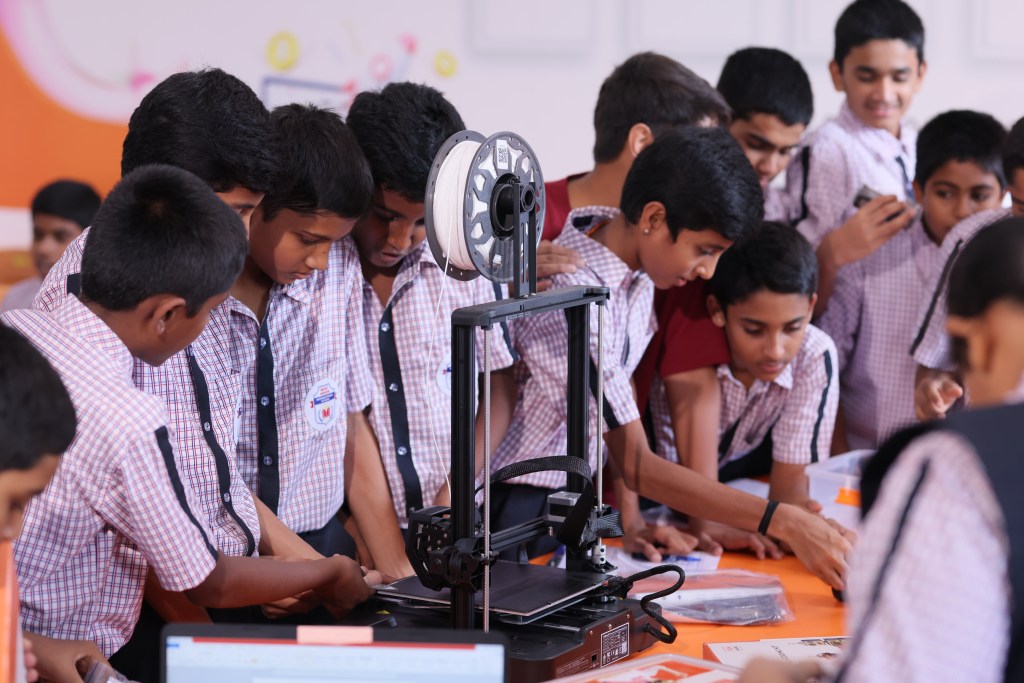
Future-ready schools can integrate these skills into everyday education through:
- Smart classrooms
- STEM education
- Robotics and Coding
- Project-based learning
- Public speaking
- Sports and extracurricular activities
- Leadership programmes
- Career guidance and counselling
These experiences help students apply classroom knowledge to practical situations and develop skills beyond textbooks.
Future Skills and Holistic Education
Academic excellence remains important, but students also need communication, creativity, collaboration, digital awareness, leadership, and adaptability to navigate a changing world.
A holistic educational environment gives students opportunities to learn, explore, communicate, create, collaborate, and develop confidence.
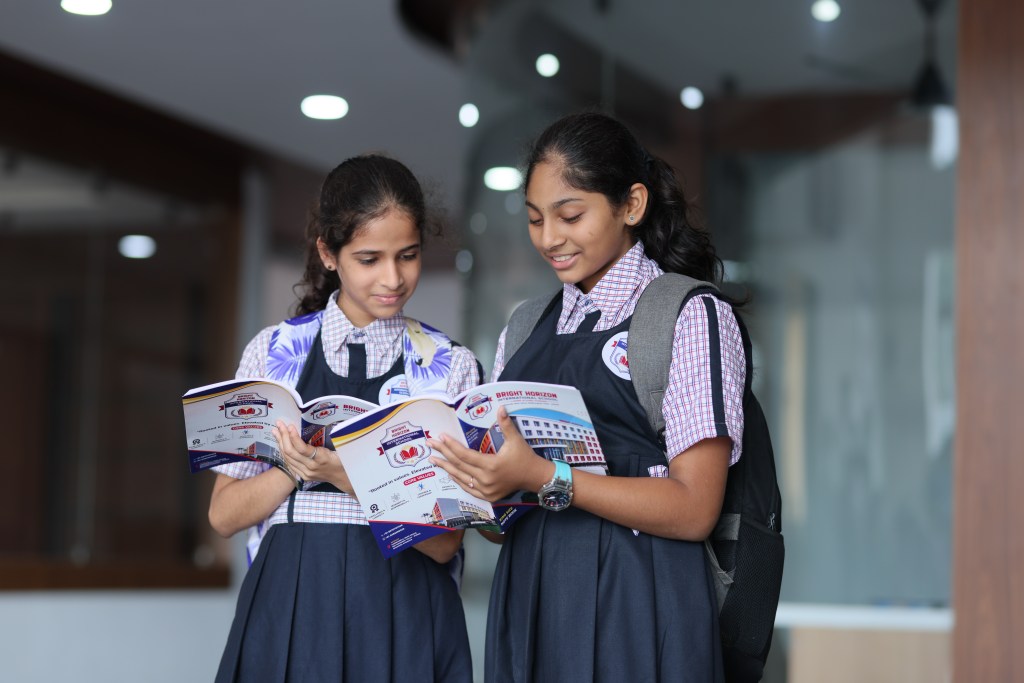
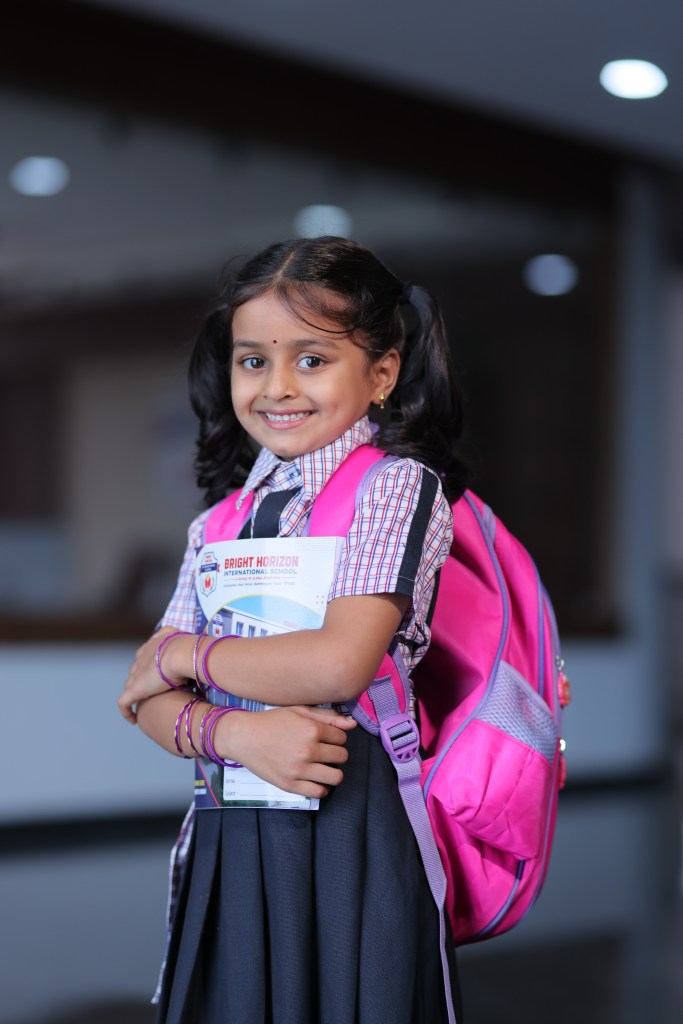
Future-Ready Education at Bright Horizon International School
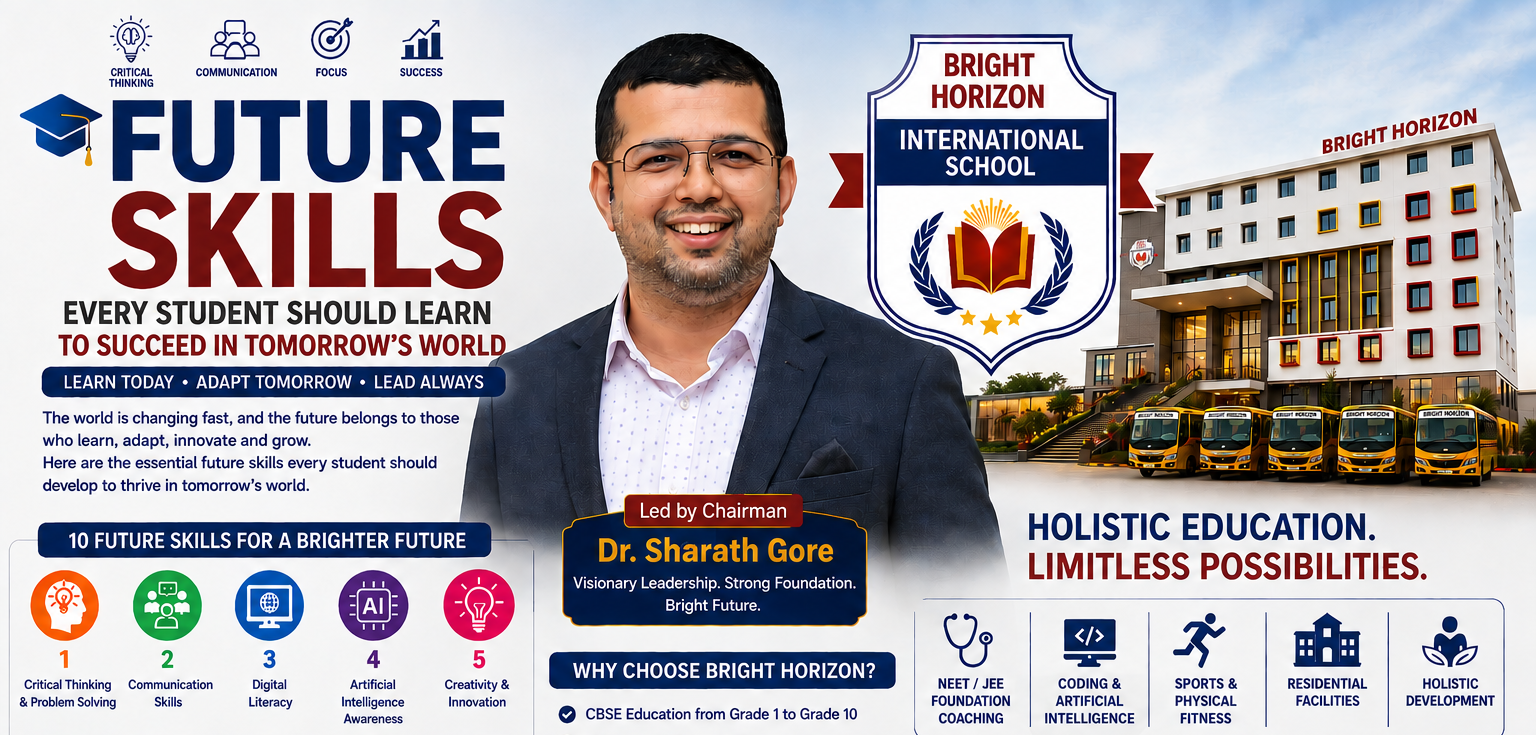
At Bright Horizon International School, academic learning is supported by a broader educational environment. Led by Chairman Dr. Sharath Gore, the school provides CBSE education from Grade 1 to Grade 10, with opportunities including NEET/JEE/CA Foundation coaching, Coding, Artificial Intelligence, Sports, residential facilities, and holistic development.
This approach brings together academic learning and future-focused skills, helping students explore technology, develop confidence, participate in sports, and build a strong foundation for their future educational journey.
summary
The future belongs to students who are ready to learn, adapt, innovate, and grow. Critical thinking, communication, digital literacy, AI awareness, creativity, teamwork, emotional intelligence, leadership, financial literacy, and adaptability are valuable skills for tomorrow’s world.
By developing these skills from an early age, students can become more confident learners and responsible future citizens.
Investing in future skills today helps build capable, confident, and future-ready students for tomorrow’s opportunities.
 Education Karnataka
Leave a comment