

The Importance of STEM Education: Preparing Students for the Future
Discover the importance of STEM education and how CBSE schools are integrating Science, Technology, Engineering, and Mathematics to prepare students for future careers.
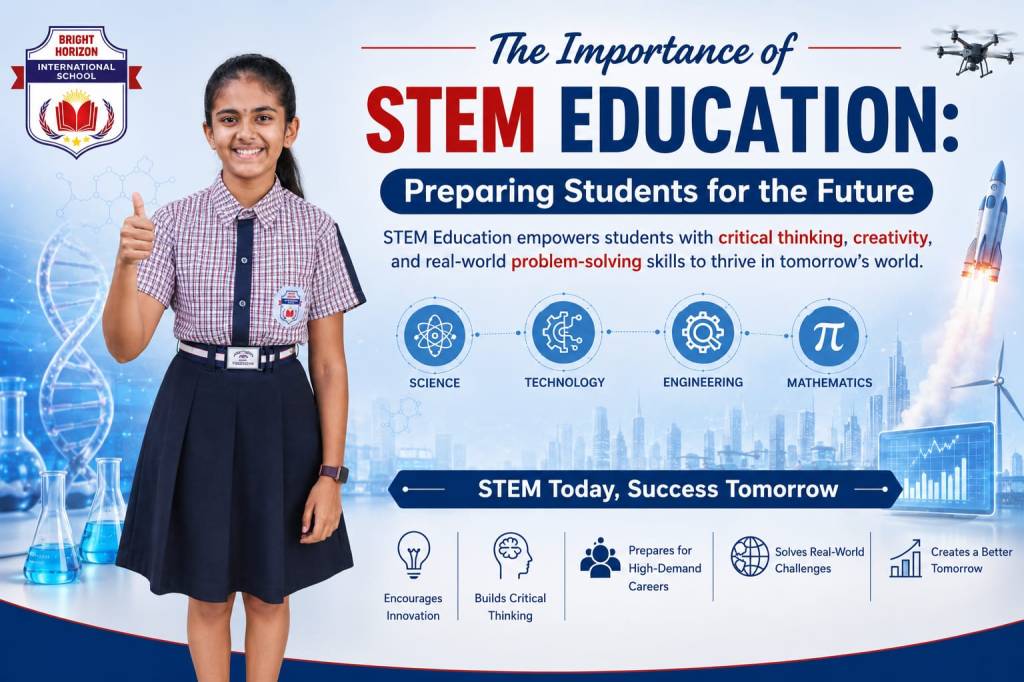
The world is changing faster than ever before. Technology is transforming industries, creating new career opportunities, and reshaping the way we live and work. To succeed in this rapidly evolving world, students need more than traditional classroom memorization—they need the skills to innovate, think critically, and solve complex problems. This is where STEM Education plays a vital role.
STEM, which stands for Science, Technology, Engineering, and Mathematics, is an interdisciplinary approach to learning that encourages students to explore, experiment, and apply their knowledge to real-world challenges. In India, with the implementation of the National Education Policy (NEP), major educational boards like the CBSE (Central Board of Secondary Education) are heavily prioritizing STEM to make students future-ready.
What is STEM Education?
Instead of teaching subjects in isolated silos, STEM combines them through hands-on learning experiences and real-life applications. It integrates four critical disciplines into a single, cohesive learning paradigm:
Science: Understanding the natural world through observation, hypotheses, and experimentation.
Technology: Utilizing digital tools, coding, and software innovations to solve modern problems.
Engineering: Designing, prototyping, and creating practical solutions to structural or systemic challenges.
Mathematics: Developing logical reasoning, pattern recognition, and analytical skills.
The CBSE Shift: Aligning with STEM and NEP
The CBSE board has been a frontrunner in transforming the Indian educational landscape by embedding STEM methodologies into its curriculum. Moving away from rote learning, CBSE’s current framework focuses heavily on competency-based education.
Key CBSE STEM Initiatives:
Atal Tinkering Labs (ATLs): In collaboration with NITI Aayog, CBSE schools feature dedicated workspaces where students get hands-on experience with 3D printers, robotics, and electronic development tools.
Skill Subjects: CBSE has introduced specialized skill modules at the middle and secondary school levels, including Artificial Intelligence (AI), Coding, Data Science, and Design Thinking.
Experiential Learning: Board assessments are increasingly shifting toward evaluating analytical and application-based skills rather than textbook memorization.
Why is STEM Education Important for Future Success?
- Develops Critical Thinking and Problem-Solving Skills
STEM education teaches students how to think rather than what to think. By tackling open-ended projects, students learn to analyze problems from multiple angles, evaluate different solutions, and make data-driven decisions. - Encourages Innovation and Creativity
Innovation begins with curiosity. STEM classrooms encourage students to ask questions, experiment with alternative ideas, and build physical or digital prototypes. Many of today’s greatest technological advancements are driven by individuals who developed strong STEM foundations early in life. - Prepares Students for High-Demand Future Careers
According to global employment trends, some of the fastest-growing and highest-paying careers are rooted in STEM fields. CBSE’s inclusion of AI and Coding ensures Indian students can compete globally in sectors like:
Artificial Intelligence & Machine Learning
Healthcare, Biotechnology, and Genetic Engineering
Space Research and Aerospace Engineering
Data Science and Cybersecurity
Robotics and Industrial Automation
- Builds Resilience and Independent Learning
STEM projects inherently involve trial and error. When a line of code fails or a robot prototype doesn’t balance, students learn to debug and try again. This builds a growth mindset, teaching children that mistakes are not failures, but essential milestones in the learning process. - Enhances Collaboration and Teamwork
In the real world, innovation doesn’t happen in a vacuum. CBSE’s project-based learning model forces students to work in teams, communicate their ideas clearly, delegate responsibilities, and respect diverse perspectives to achieve a common goal.
STEM Education at Bright Horizon International School
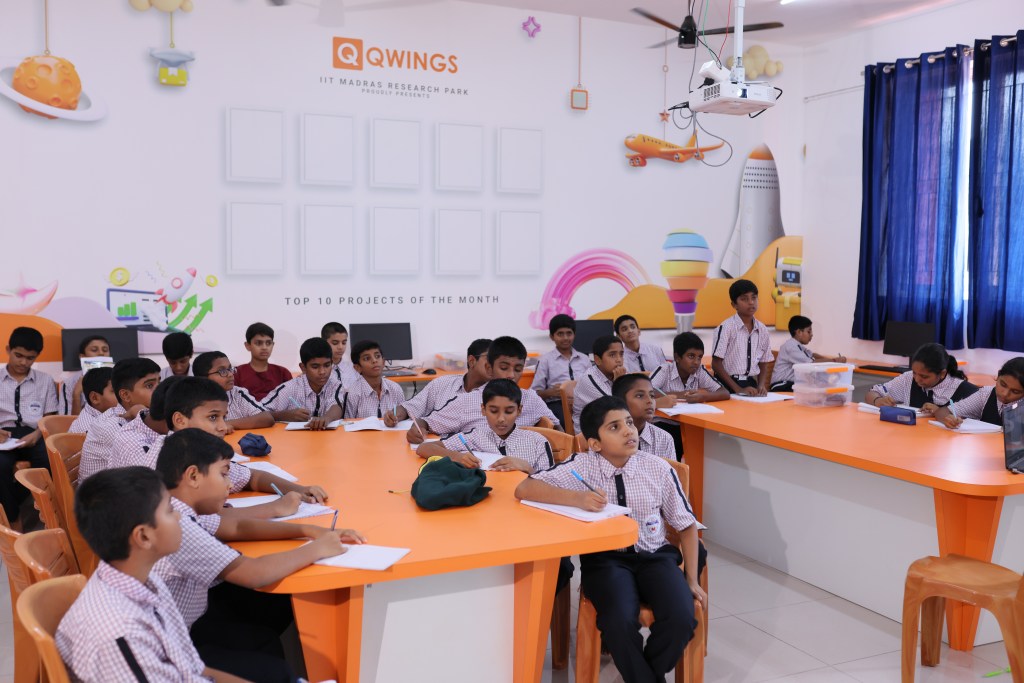
At Bright Horizon International School, STEM education can be integrated into learning through practical activities, experiments, project-based learning, technology-enabled classrooms, and opportunities for students to explore their own ideas.
Under the leadership of Chairman Dr. Sharath Gore, the school focuses on creating an educational environment where students can develop strong academic foundations alongside essential future-ready skills.
The goal is to encourage students to move beyond simply memorising information and instead understand, question, experiment, create, and innovate.
How STEM Shapes Future-Ready Students
How STEM Education Transforms Traditional Learning
The shift from a conventional academic setup to a STEM-driven environment radically changes classroom dynamics.
ENQUIRE NOW :https://brighthorizoneducationfoundation.com/


Leave a Reply